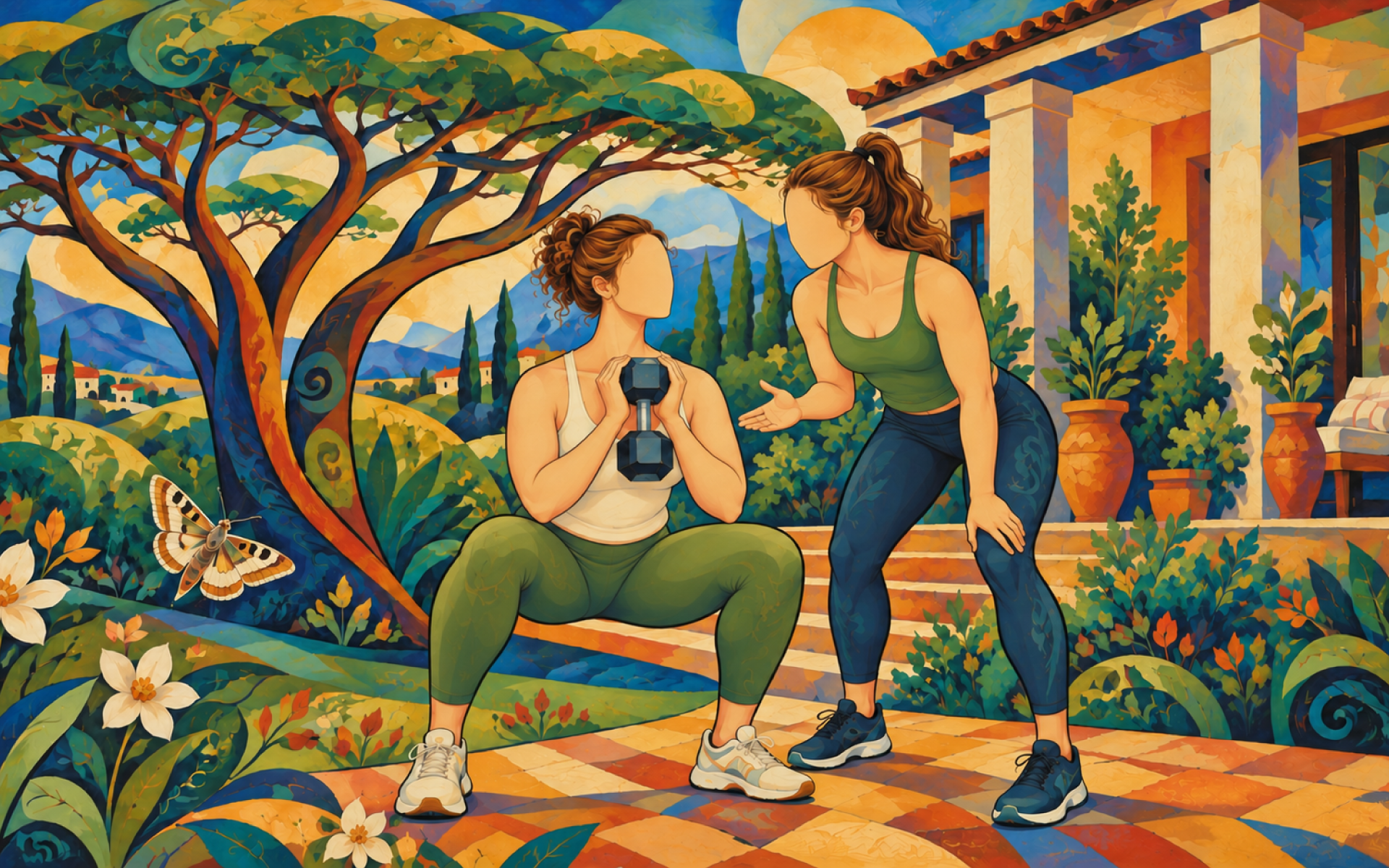
I met up with a friend of mine in a garden. By their feet was a carpet of grass fed thick by the winter rains.
I touched my friend’s wrinkled, hard skin in greeting before I lay down. A white moth weaved through the blades of grass, pausing to stare at me before fluttering away.
The firm earth and winter sun eased my joint pain, like I was being given a free spa day.
One of my first contributions to Change Exchange was about this friend, an acacia tree. This time, I came to the tree to reflect on my physical health.
Earlier, I’d met up with another friend – a human one called Jasmine – who was working at the Sustainability Institute over the weekend.
She’s completing a course on fitness and conditioning, and has a passion for community health.
Strength, to her, is not about muscles, competition and vanity, but about quality of life and community wellness.
She tells me about how she cares about being strong, so that she will be able to carry her dad if he falls.
I met to speak with her about my experience with autoimmune diseases, because I know she’ll use my story to develop inclusive fitness spaces.
The autoimmune conditions I spoke to her about were reactive arthritis and ankylosing spondylitis.
The former I had when I was 12 after a Salmonella infection. The latter I have lived with since around 18.
I’ve learned that strength training is vital for handling joint-related autoimmune diseases, but all exercise must be done with careful consideration of what might worsen or improve symptoms.
What you can do changes daily, too. Some days, exercise for me can look like a 5km hike.
For other days, it’s lying flat on my yoga mat, trying not to scream.
I told Jasmine how I often avoid health-centred groups due to their ableism. Even in casual hiking groups, I have had to endure conversations about how being ill is purely a state of mind, that the body can will itself out of sickness.
Fitness enthusiasts have also accused me of lying, of being brainwashed, of seeking attention, of being lazy.
These people don’t understand what it’s like to be at the whim of your body. One day, they’ll learn, but I’m not going to wait around for them to get the character development I went through as a child.
It’s rare to meet someone who cares about fitness who is truly, deeply willing to listen, learn and empathise.
Jasmine is one of those diamonds. I’m so excited to see how she’ll impact communities with her work. She is a safe space for those who have unreliable bodies and physical limitations.
After chatting with her, I went into the gardens to meet with the acacia tree.
I stayed there for about an hour, soaking in the natural, quiet beauty that is often drowned out by the bustle of the city.
I’d been dealing with a flare up that week. As of late, my body has been flaring more often despite my more diligent yoga routine, good diet and medication.
My new baseline of pain has gone up. An old man with ankylosing spondylitis once told me that the 30s were the roughest decade for him. I’m a few months away from 30, so maybe that’s it.
I leave the Institute to overlapping choruses of birds. I walk slowly, listening to the music in wonder.
Speaking to Jasmine and resting in this beautiful space has given me energy I have sorely lacked.
I realise that home is where places and people give you comfort. It helps you replenish your resources. The world outside takes energy as it is. Home should not.
Right now, I’m living by a busy road and it’s not doing good for my nerves. The noise and the smells take a lot out of me. I know now what I need in the coming decade of my life. I need to seek out home. The place, and the people.