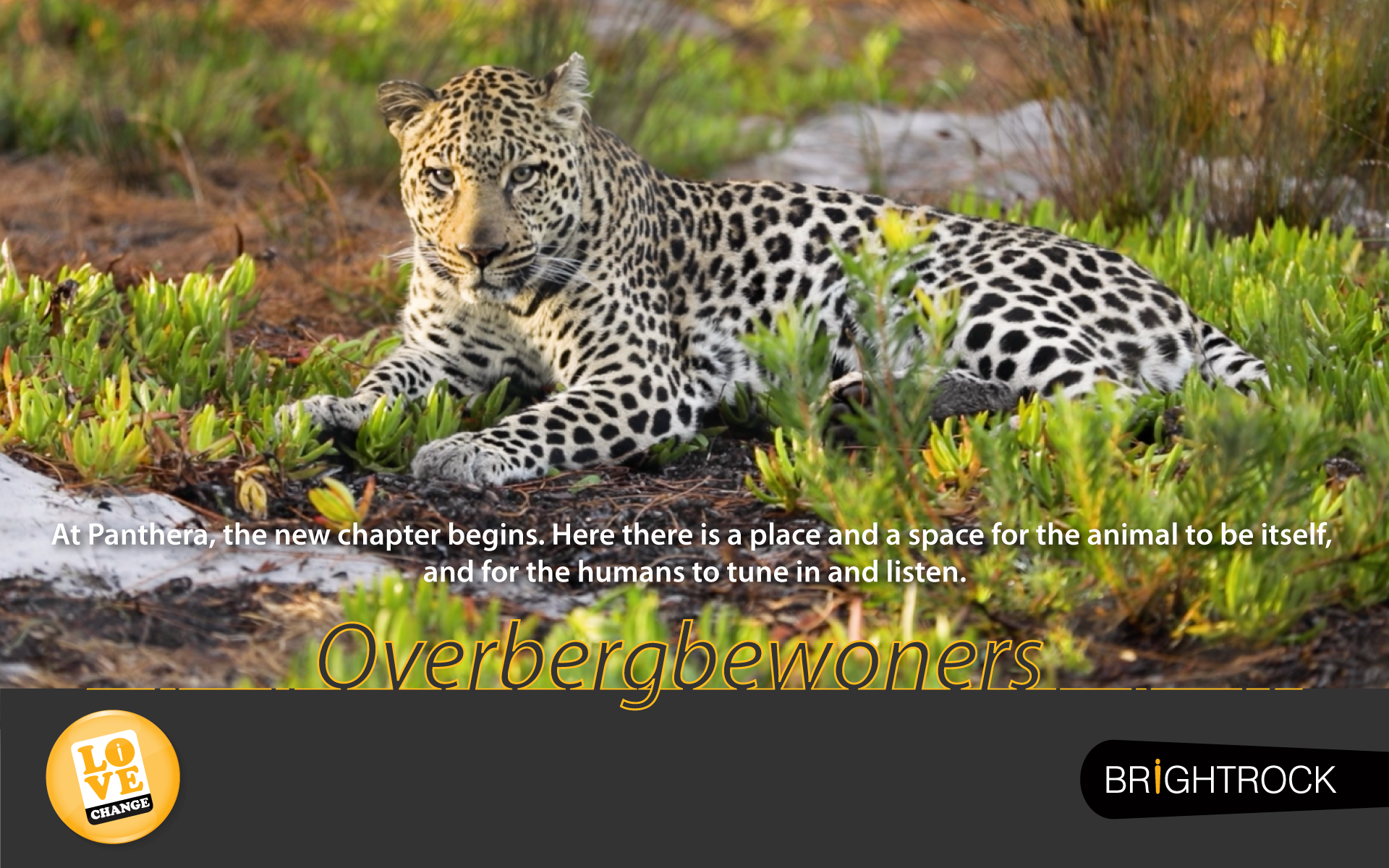
Between the little village of Papiesvlei and the Phillipskop Mountain Reserve in the Western Cape, not too far from Stanford, the stillness of the night is broken by the call of the wild. The roar of a lion, the cry of a jackal, the rasping grunt of a leopard.
For Lizaene Cornwall, co-founder and director of the Panthera Africa Big Cat Sanctuary, it is a chorus that brings happiness to her heart.
“So many people, when their sleeping patterns are broken, wake up the next morning feeling tired and maybe a bit irritated,” she says. “I wake up with a smile on my face.”
She knows, by name and by nature, the creatures that have made this place their home. There is Gabriel, the leopard, hand-reared as a cub at his previous facility. Deprived of mother’s milk, he broke both front legs in an ill-timed jump. Now he is settled in, healthy, and famous for his roly-polies.
There is Arabella, the tiger, given less than a 20 per cent chance of survival after contracting a virus as a cub. There is Neptune, the white lion, nicknamed Skaapie for his lamb-like mane.
There is Baguira, the lioness, a refugee from a circus in Argentina, where she was confined to a small trailer between performances. Now, like all the other residents of Panthera, she lives a better life in a generous enclosure, with trees and grass and wooden structures for climbing and commanding the view.
“We rescue animals and focus on their emotional, mental, and physical welfare,” says Lizaene. “And yes, it’s a retirement village!”
She founded the sanctuary with Cathrine “Cat” Nyquist, who gave up her career as a real estate broker in Oslo to realise her dream of working with animals in Africa. Lizaene’s own dream dates back to her childhood.
She grew up in Bloemfontein, besotted with the bush and wildlife. As a volunteer in private game reserves, she bottle-fed and snuggled up to cubs that had been orphaned or rejected by their mothers. At least, that’s what she was told.
It was only much later that she discovered the ugly truth: lions and other big cats were being bred in captivity for canned hunting or the harvesting of their bones. It was a wake-up call that became a call to action.
“I wanted to give a better better life to these animals that I unknowingly helped and placed in the industry,” says Lizaene.
Every animal that finds sanctuary at Panthera has a haunted past. Some have been abused, some malnourished, some left behind by the shutting down of unlawful and overcrowded facilities. All of them have one thing in common: “They arrive here having never been respected in their lives.”
At Panthera, the new chapter begins. Here there is no hunting, no pet-a-cub photo opportunities, no public viewing of feeding time. Here there is a place and a space for the animal to be itself, says Lizaene, and for the humans to tune in and listen.
“They’ll tell you what they need,” she says. “It’s very important to us to allow them the most natural environment, the opportunity to express the most natural behaviour possible.”
Given their often traumatic backgrounds, these are not creatures that could easily be settled into the wild. But sometimes, the wild finds them.
Lizaene tells the story of Jasper, a serval — a slender wildcat with outsize ears, a spotted tan coat, and a distinctive chirruping call — who suffered a traumatic injury soon after being born in a South African zoo.
He needed special care in a calm and stable environment. He found it at Panthera, where a fellow feline, a feral cat named Tammy, has become his close companion. They spend their days curled up in their enclosure, sunbathing on warm rocks and enjoying each other’s company.
For Lizaene, it’s proof that animals seek and find their well-being just as we do, in mutual support and belonging.
“The animals’ welfare and what makes them happy is our first priority,” she says. Her only regret is that she and her team cannot do enough for all the animals in need.
“The animals that are here with me, I would love to double, triple their numbers. You can’t get to them all. That’s why it’s so important to spread the message so that people understand.”
And in the stillness of the night, when she hears the wild calling, she knows that in some small way, she is making a difference.
*The Panthera Africa Big Cat Sanctuary is temporarily closed to the public as it recovers from a wildfire that swept through the region earlier this year. All 26 animals at the sanctuary were rescued and transferred to other approved facilities in the meantime. For more information, visit https://pantheraafrica.com. You can watch Overbergbewoners, produced by BrightRock, on dsTV Streaming.