On a ribbon of dirt road on the banks of the Buffeljags Dam, just outside Swellendam in the Overberg, Kosie van Zyl settles into his three-wheeled flying machine and presses the starter. The two-stroke engine thrums into life, the propeller spinning into a blur.
A short run-up and the microlight noses into the blue, a Da Vinciesque dream given wing. As Kosie levels out from the climb, he looks down at the dam, a mirror of the tree-clad mountains that rise from its shores.
This is his world: earth, water, and sky, fusing into the call of freedom that draws him, heart and soul, to home.
Below lies Ushanti, with its caravans and cottages and double-decker barge, the holiday and adventure retreat he runs with his wife Jorina and their daughters Vicky and Anine.
When he returns from a visit overseas, says Kosie, he looks around and thinks, why did you leave, when this is the most beautiful place?
He grew up on a farm in Robertson, about 10 kilometres away. He remembers the river when it still ran free, before it became a dam.
He would disappear with his friends to fish for the weekend. They would skim the ripples on a canoe fashioned from a sheet of corrugated iron, flattened by driving over it with a tractor.
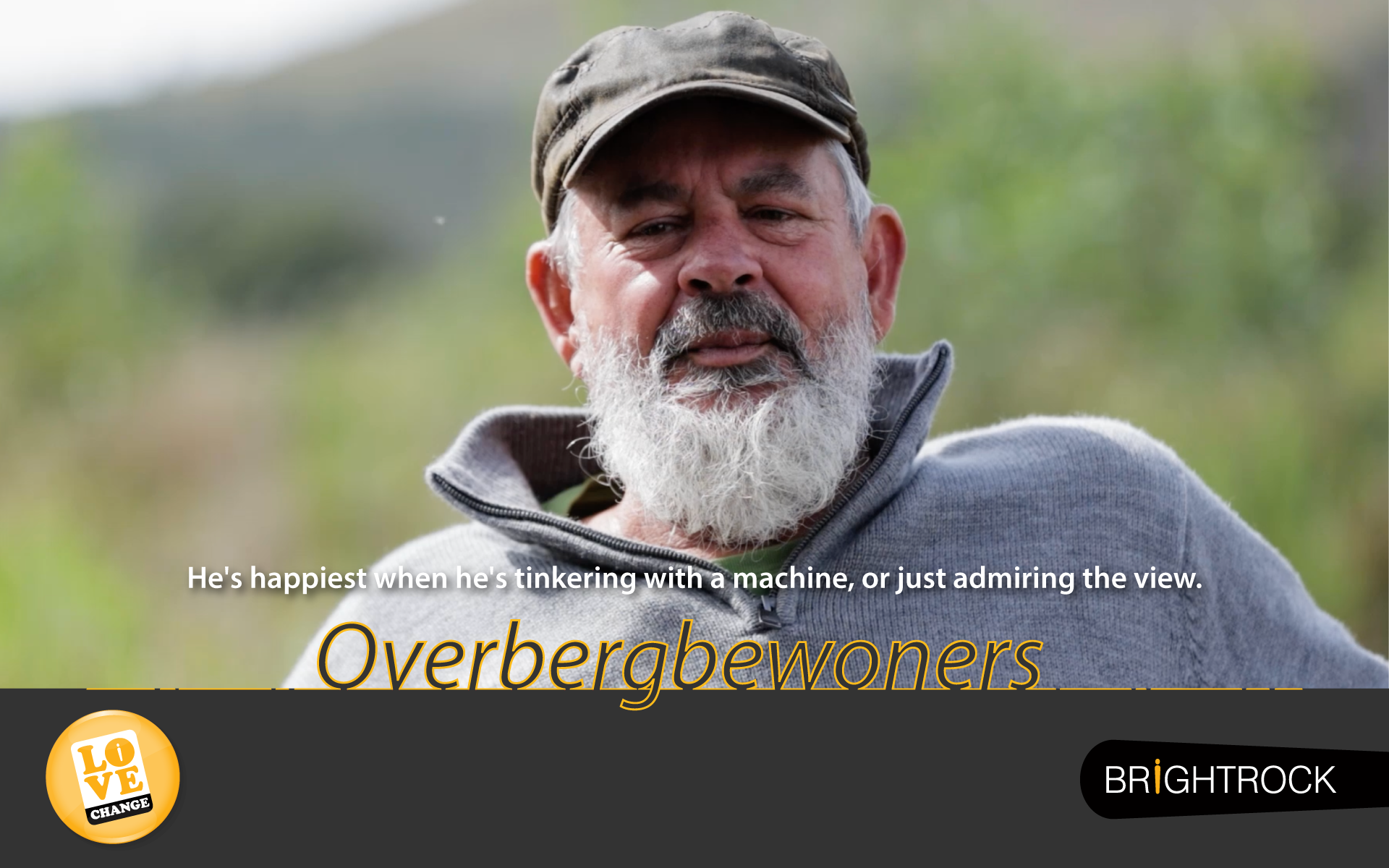
“I was never restricted as a kid,” says Kosie. Even now, sitting at the water’s edge in his T-shirt and shorts, a flat cap on his head, his bushy beard as grey as steel, he doesn’t want to be restricted.
He rebuilds motorbikes and tractors. He drives a two-tone Suzuki Samurai, in naartjie and silver, with kudu horns fixed to the grille.
“I converted a bus myself,” he says. “A Ducati bus. I made it a camper. Nothing camps better than a bus.” You find a nice spot, you take out two chairs and a table, and you’re camping. No need to struggle with a tent.
A place to take it easy in the sanctuary of nature, at home or on the road: what more could you ask for from life? Well, for one thing, a braai.
When he takes guests out on the barge — Kosie se Boot, he calls it — and it putt-putts across the dam, with an aluminium dinghy trailing on a short line behind, he hooks the grid and tongs on board, ready for the promise of the fire on the bank.
Sometimes the guests will talk about the stresses and worries of life in the city, the constant quest for more, more, more. Kosie doesn’t see things that way.
“At this stage of my life, I have more or less enough,” he says. “I’m not crazy about money.”
Just above the doorway of the stone-and-mortar cottage that serves as the reception office at Ushanti, beyond the flamingo sculpted from iron rods and the fuel tank of a Yamaha, there is a two-man crosscut handsaw with a legend painted on it in white letters.
“Mag jy nooit so arm wees dat jy net geld oor het nie,” it reads. May you never be so poor that all you have left is money.
His wealth is all around him, in the heart of family, in the quietude of nature, in the crafts he worked with his hands to steer him on his journey.
“What you will find here, first of all,” he says, “is silence. You can hear that there are no cars and traffic and stress here. Everything is easy, slow, unrushed.”
He wades into the still water, shirtless, glass in hand, as the sun begins its slow descent into the pocket of the mountains.
At the end of the day, that’s all you really have, believes Kosie. The day that you’ve just lived. The past is long gone. “There’s nothing you can do about it, after all.” And who knows what tomorrow will bring?
“So I happily live day to day. If I can do something nice, I look forward to it and I do it.”
A flock of white-winged Western Cattle Egrets wheels above. Kosie looks up, following their flypast. He’s been up there too, and he knows exactly what it feels like.
“Lekker,” he says, and he raises his glass to the sky.