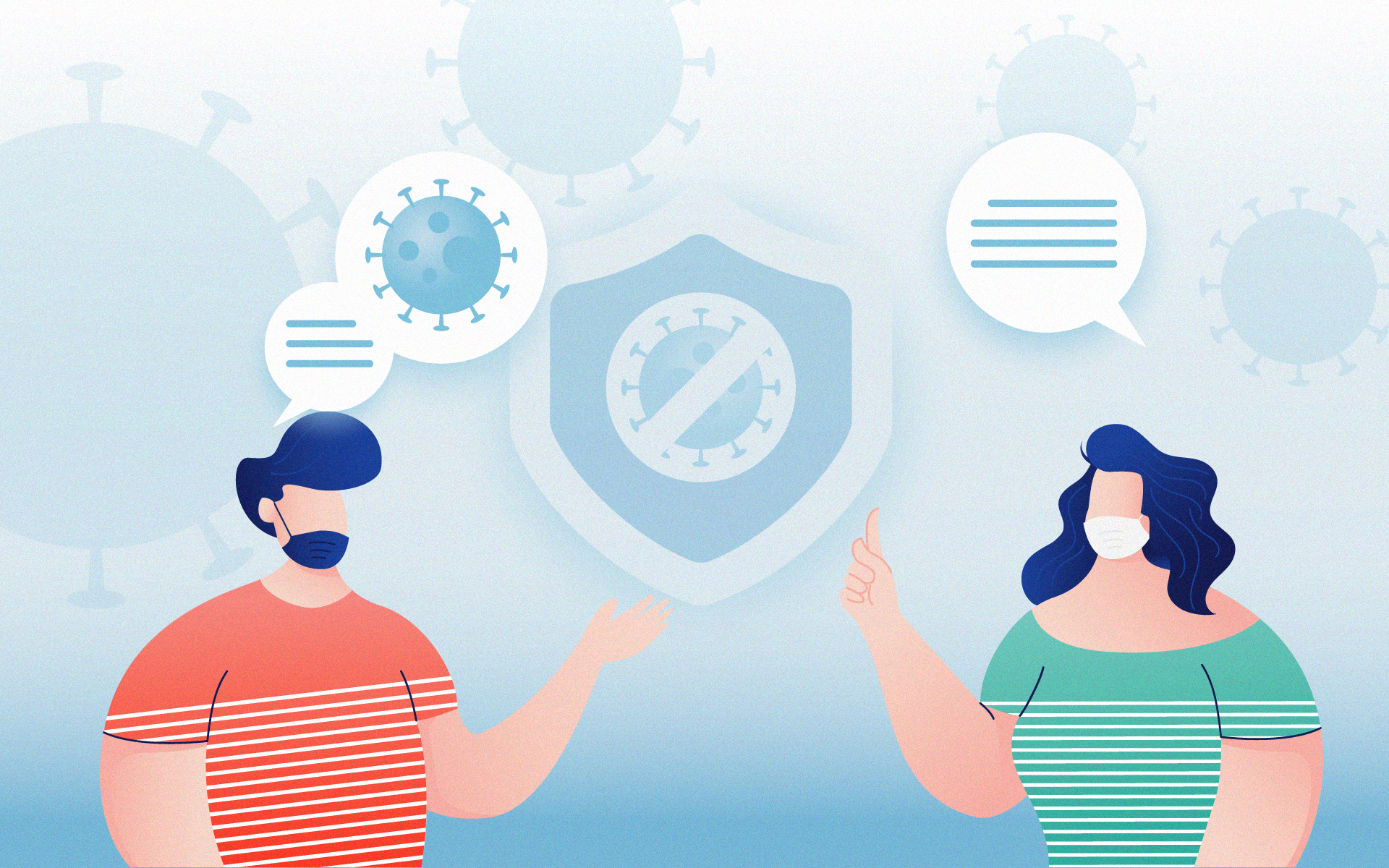
It’s easy to lose your marbles during a pandemic or state of emergency. But with a few tools and some balanced social distancing, you can get through it. Here’s how.
Some changes we choose; other changes are forced upon us. When a pandemic – or any nationwide or worldwide state of emergency – strikes, it forces changes on individuals and communities. What’s the best way to cope with that?
A 2012 Virginia Tech study into the traumatic aftereffects of mass shootings may hold a clue. There, the researchers found that people in affected communities expressed a need for belonging, and that collective solidarity had remarkable benefits for their personal wellbeing. But what does that mean during a disease outbreak, when you can’t gather as a community and when all anybody can talk about is social distancing?
First, it’s important to emphasise that when it comes to contagious pandemics like Covid-19, social distancing (physical distancing, including quarantine and workplace distancing) is the most effective weapon against the spread of the virus. A study in Singapore, published in The Lancet Infectious Diseases journal, confirmed that this is the most effective way to reduce the number of SARS-CoV-2 cases.
Tips and tools for social distancing
So, how should you do it? The National Institutes of Health in the United States suggests staying at home as much as possible, going out only for critical needs like groceries and medicines, or to exercise and enjoy the outdoors in wide open spaces. If you’re a South African who’s having nightmares about the national lockdown, you might be comforted to know that the NIH also recommends ‘avoiding gatherings of more than 10 people, no handshakes, regular handwashing, and, when encountering someone outside of your immediate household, trying to remain at least six feet (about 2 metres) apart’.
That’s the How. To understand the Why, NIH Director Dr Francis Collins points to a study published in the journal Science, which found that:
•
For every one confirmed case of COVID-19, there are likely to be five to 10
more people with undetected infections.
• In China, people with undetected infections ended up being the source for
about 86% of confirmed cases.
• The spread of COVID-19 slowed considerably in China after the country
established travel restrictions and social distancing.
Not convinced by the science? Maybe a history lesson will help. In 1918, near the end of World War I, the deadly Spanish Flu spread across a quarter of the world’s population (killing up to 100 million people in the process) – and cities around the United States were planning parades to support the war effort. Philadelphia went ahead with its parade, while Saint Louis cancelled its parade and limited public gatherings. Just one month later, more than 10 000 people in Philadelphia had died of Spanish Flu, compared to fewer than 700 people in Saint Louis.
Keep your distance (but not too much)
While keeping your distance is vital, be sure not to cut yourself off from the world completely. A 2018 study at Caltech found that long-term social isolation can harm your mental health and cause the build-up of a particular brain chemical called Tac2/NkB. After two weeks of social isolation, mice became more aggressive towards unfamiliar mice, and showed signs of persistent fear and hypersensitivity to threatening stimuli.
The take-home message? Stay connected to the world around you through phone calls and video chats – but remember to strike a healthy balance. During a state of emergency, when everybody’s practising social distancing from the outside world, people tend to rely on their immediate circles more than usual. A sense of obligation – like checking in on a parent or doing the shopping for an elderly friend – may hold some relationships together, but a 2020 study by Michigan State University found that there’s a “sweet spot” between sticking together and becoming resentful.
“The line in our study is when [the relationship] crosses over and starts to be either a massive financial burden or something that disrupts your day-to-day life,” warned study author Professor William Chopik. “While engaging in substantive obligation can benefit others and make someone feel helpful, it is still costly to a person’s time, energy and money. In a way, major obligations violate the norms of friendships. Interestingly, you don’t see that violation as much in relationships with parents or spouses.”
He added that our longest-lasting friendships continue because we enjoy them, “But if obligations pile up, it might compromise how close we feel to our friends. Because friendships are a relationship of choice, people can distance themselves from friends more easily than other types of relationships when faced with burdensome obligations.”
The bottom line? Keep up the small acts of kindness, but don’t become a burden to the people around you. Maintain your distance (physically), but not too much (emotionally). And work through the epidemic by remembering that you are part of a community.
Oh, and wash your hands.
Leave a Reply